
Every time I open up the Threads app I see several posts from people saying that their podcast is doing numbers without video. Or they’re asking the question, “is video really necessary for podcasting in 2026”.
The short answer: it depends.
The real question is, however, how fast do you want to grow your audience? The podcasters that doubt the necessity of video for podcasting are probably either someone who struggled to grow theirs in the years before video, or someone who afraid they’re going to have to make some changes. Here, at Podcast Titans, we’re all about the video podcasts.

Podcasting Should Be About the Listening Experience
This has to be said. A podcast, by definition, is that audio RSS feed. Without the audio, you don’t have a “podcast”. And with that, if people can actually find it on Apple, Spotify or other platforms, what do you have? You can create a video series, and call it a podcast, sure. But if you don’t actually have that audio feed available, it’s not really a podcast. It’s a just a video series. So, simply putting the work “podcast” in the title of the series doesn’t make it a podcast. So, even if you think the video isn’t necessary for podcasting in 2026, the audio most definitely is.
Video Is How More People Will Discover Your Podcast
I think the stats will back this up, and most people will agree with the fact that video is the the preferred type of content for social media platforms. Videos tend to get better engagement. I think it’s also fair to say that most people are spending their time scrolling through Apple Podcasts or Spotify in search of a new podcast. Even though that does happen. People spend more time scrolling through Instagram, TikTok and YouTube Shorts. Which means, if you have content that shows up in their feed, you’re more likely to be discovered. And if that video peaks the viewer’s interest, or speaks to a problem their looking to solve, they’re more likely to want to listen to, or watch, more of this content.
Without video, that ain’t happening.
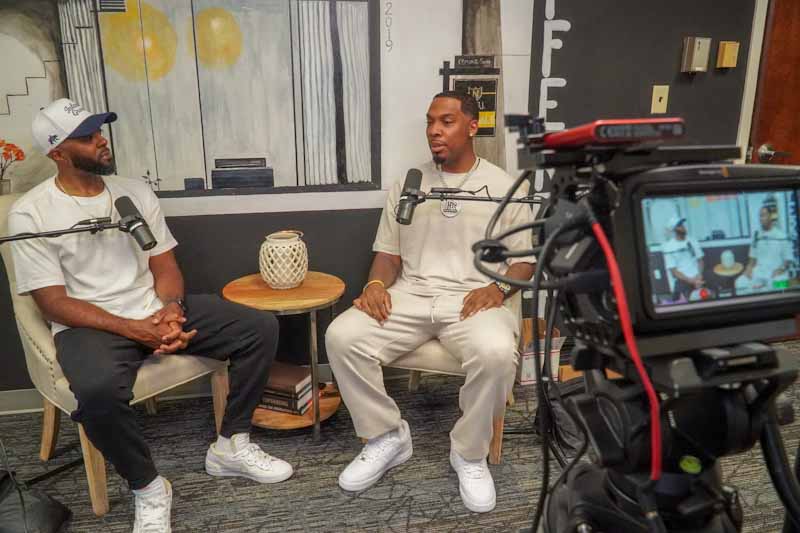
Provides More Assests
Lots of podcasters are adopting the video component for their podcast. And lots of them are making a big mistake with the video.
What’s the mistake?
The mistake is uploading the full-length video to YouTube.
Why is this a mistake?
It’s a mistake because, especially if you’re starting from zero, you may not have an audience that will consume the full video. They’re more likely to consume the full podcast audio, though. Simply because listening requires less resources and attention than watching.
So, the video can be broken down into shorter segments. Not short-form, but mid-form. A single episode can produce multiple assets in the form of segments that are 5 to 10 minutes in length. Each of these segments should be optimized for YouTube with unique thumbnails, titles and descriptions. Each segment is an asset. These assets are easier to consume, they get to the point faster, and they’re more shareable than a full-length video. In addition to this, you’ll have more content to share in your newsletter and email marketing.
One of the bonus benefits of having these mid-form segments is a better understanding of what your audience wants from you. Through your sharing, posting, email distribution and YouTube analytics, a clearer picture will begin to form as the numbers will tell you what your audience is most interested in. From there, you just continue to drill in.
So, is it necessary?
This is a no-brainer!
If you want to grow your authority faster, you need video. End of story.